
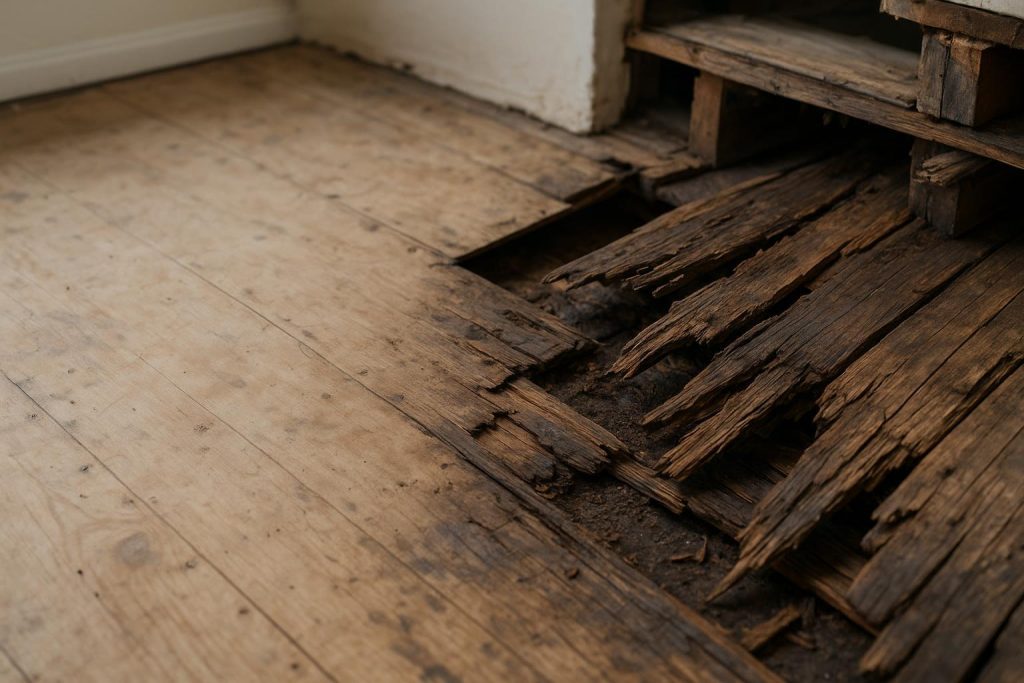
Identifying a Damaged Subfloor: Key Indicators and Next Steps
A subfloor is an essential structural layer that lies beneath your finished flooring, providing support, stability, and a flat surface for materials like hardwood, carpet, or tile. When the subfloor deteriorates, it can cause creaking, sagging, or more serious problems underfoot. Recognizing the warning signs early can save you time, money, and stress. In this guide, we’ll discuss how to spot a bad subfloor, reasons it becomes damaged, and what you can do to address it. We’ll also look at common remedies, from partial repairs to complete removal through interior demolition.
Why Is the Subfloor So Important?
The subfloor offers stability and distributes the load of your flooring and furniture across the foundational elements of your home. It’s usually made of plywood, oriented strand board (OSB), or similar wood-based materials. A properly installed and maintained subfloor keeps your home level, prevents squeaks, and protects against issues like moisture infiltration. Once this structural layer becomes compromised—whether from water damage, rot, or general wear and tear—it can result in major inconveniences and even safety hazards.
Key Indicators of a Failing Subfloor
- Sagging or Bouncy Areas: If you walk across the floor and notice soft spots or bounciness underfoot, this could suggest the wooden subfloor has lost its rigidity.
- Excessive Creaking or Squeaking: Minor squeaks can happen in any home. However, frequent and loud squeaking every time you step in certain spots can point to warped or loose subfloor panels.
- Visible Discoloration: Dark stains, water marks, or signs of mold indicate moisture intrusion. When wood is exposed to water for extended periods, rot can set in.
- Cracks Along Joints: If you see cracks at the seams or joints of the subfloor sheets, this might mean the material is expanded, contracted, or otherwise physically damaged.
- Persistent Musty Odor: A lingering odor can be evidence of mold growth or mildew trapped beneath the finished flooring, usually a result of water damage.
- Loose Flooring Above: If your hardwood planks or tiles are popping loose, it may not be the floor covering failing—it could be the damaged subfloor failing to provide a stable anchor.
Main Causes of Subfloor Damage
A subfloor rarely fails overnight. Typically, it experiences a slow, steady decline caused by one or more of the following:
- Water Damage: Leaking pipes, spills, or humidity can cause wood to swell, buckle, or rot over time. Even minor leaks left unchecked can lead to larger structural problems.
- Poor Installation: If the original subfloor was poorly installed—using the wrong fasteners or inadequate support—it can lead to early wear and tear.
- Excessive Weight: Placing extremely heavy items in one spot, such as large appliances or heavy furniture, can stress the subfloor, especially if it is not properly supported.
- Prolonged Neglect: Floors that are never inspected or maintained can develop hidden issues that worsen with time, including weakening of plywood and separation of layers.
Hidden Hazards of a Bad Subfloor
Along with creating an irregular walking surface, a severely compromised subfloor can pose larger threats:
- Compromised Structural Integrity: Floors can sag significantly, and in extreme cases, the subfloor may fail and collapse if the underlying joists are also weakened.
- Mold and Mildew: Moist environments under floors can promote mold growth, affecting indoor air quality and triggering allergies or respiratory issues.
- Electrical Risks: Subfloor damage involving water can potentially harm wiring running below the floor, creating a shock or fire risk.
Addressing these hazards sooner rather than later is crucial. Even if the damage seems small, it’s wise to evaluate the situation thoroughly and ensure you’re not missing deeper structural issues.
Evaluating the Extent of the Damage
Determining how bad your subfloor really is often requires a closer look. In some cases, you can remove a portion of the finished floor or cut out a small section to inspect the plywood or OSB material beneath. If it’s soft, crumbly, or shows clear signs of rot, you may need to replace it. A professional assessment is always recommended if you’re unsure. Experienced contractors can see whether the problem is localized (a quick patch job) or pervasive and requiring bigger interventions.
Repair, Replace, or Remove?
Once you identify subfloor damage, deciding how to fix it can be confusing. Here are some common options:
- Localized Repairs: If damage is limited to a small area—like under a specific section of flooring—you can cut away the compromised subfloor and replace just that section. This is the most budget-friendly option and usually requires less disruption.
- Partial Replacement: In cases where one room or one side of the floor is impacted, you may remove and replace the subfloor in that entire zone. This approach ensures you address hidden moisture or mold issues while preserving the rest of the home’s structural stability.
- Full Subfloor Removal: If the problem covers a wide area, particularly if there has been long-term water damage or rot, a total subfloor removal is often the safest route. This more extensive job typically involves removing finished floors first, then pulling up the subfloor material so it can be disposed of properly. It’s wise to replace it with high-quality, water-resistant underlayment or new plywood.
When to Consider Professional Help
In some instances, do-it-yourself repairs might be enough. However, if your subfloor is badly rotted or the damage extends into supporting beams, enlisting professional assistance could be your best move. Subfloor removal requires caution, especially if you’re dealing with large sections, potential mold, or tricky demolition areas. Tearing out wood and dealing with old nails, adhesives, and dust can be messy, so a no-hassle, professional approach saves time and headaches.
If you decide the project warrants more extensive work, consider interior demolition services. Interior demolition professionals typically handle smaller-scale tear-outs like drywall, flooring, or old fixtures. They can remove and dispose of the subfloor, while ensuring the surrounding structural elements remain intact. Because every job varies, it’s always best to ask for an assessment and an upfront, no surprises estimate.
Steps to Remove a Damaged Subfloor
If you’re leaning toward a replacement or complete removal, here is the general process:
- Preparation and Safety: Clear out furniture or appliances. Wear protective gear such as gloves, dust masks, or eye protection to minimize health risks due to mold or debris.
- Floor Covering Removal: Take up tile, carpet, or hardwood to access the subfloor. This can be labor-intensive if the materials are old or heavily glued, so be patient.
- Subfloor Detachment: Locate and remove or cut through nails, screws, or adhesives. Damaged sections can be pried up or cut out in smaller pieces to avoid causing accidental harm to underlying structures.
- Assessment and Cleanup: Inspect the joists below for any signs of rot or mold before installing new boards. Dispose of debris responsibly. A junk removal crew can help you haul away the old materials if needed.
- Replacement Installation: Use moisture-resistant plywood or OSB panels, securing them with the correct fasteners to prevent squeaks. Ensure each panel is level and well-supported.
This process can take hours or days, depending on the extent of the damage and the size of the area. To avoid messing up other parts of your home, it’s important to be systematic and methodical at every step.
Preventing Future Subfloor Issues
Once your new subfloor is in place or your old one is repaired, a little maintenance keeps it solid for years to come:
- Fix Leaks Immediately: Address dripping pipes, leaky appliances, or window and roof leaks promptly to prevent water from seeping into flooring layers.
- Maintain Healthy Humidity Levels: Use dehumidifiers or proper ventilation, especially in humid climates or damp basements, to reduce moisture buildup.
- Distribute Weight: Try not to focus extremely heavy items in one corner of a room. Spread out the load to reduce stress on a single area of subflooring.
- Routine Inspections: Every few years, have a quick look for new stains, soft spots, or cracks. Early detection is key to staying ahead of costly repair bills.
Do You Need Full Demolition?
It’s natural to wonder whether the entire floor needs to come out if only a portion is damaged. In a lot of cases, partial repairs are sufficient—as long as you haven’t uncovered widespread rot or mold that compromises the home’s structure. Full demolition usually comes into play when:
- You’re renovating an older home and want the peace of mind that comes from a fresh start.
- Substantial water damage has wrecked multiple rooms or the entire level of your home.
- Mold has spread uncontrollably under the flooring, posing potential health risks.
If you’re dealing with a large-scale floor removal, interior demolition services can be a quick, on-time solution that takes much of the guesswork out of the process. You’ll avoid worrying about renting specialized tools, hauling heavy debris, or meeting disposal regulations.
Consider Local, Professional Support
While repairing a subfloor can be a weekend project for some handy homeowners, it’s a different story if the damage runs deep or spans a big area. That’s when a local team can step in and handle both the demolition and the removal of old subfloor materials, leaving your space clear and ready for a new installation. Whether you choose to tackle the task yourself or hire professionals, the key is to act quickly and confidently so you’re not living with a weakened floor.
If you have any concerns about your structural flooring or simply prefer to outsource heavy lifting, we handle it from start to finish—removing old material, disposing of waste, and helping you navigate a no-hassle experience. By taking immediate action and employing proper methods, you can maintain a healthy, solid floor for years to come.
Final Thoughts
A failing subfloor is more than just a noisy annoyance; it can escalate into a serious safety concern if ignored. Luckily, many problems start out small and can be corrected with proper repairs. By familiarizing yourself with the telltale signs—sagging, creaking, discolored areas, or odors—you’ll know when it’s time to take a closer look or call a professional for help. If you do need to remove large sections or undertake a more extensive project, interior demolition can be a practical solution to ensure no structural detail is overlooked. Ultimately, spotting and fixing a bad subfloor early saves you time, worry, and money—leaving you with a sturdy, trouble-free foundation for your home.