
How to Handle Old Hardwood Flooring Disposal
When you’re updating your home, one of the most challenging tasks can be figuring out what to do with the old hardwood floors. They might be worn, water damaged, or simply no longer match the style of your space. Whether you’re in the middle of a renovation or you’ve inherited a property that needs updating, you might be wondering: can you recycle old hardwood floors, and if so, how? Let’s walk through the factors to consider, from determining if your hardwood is salvageable to finding the right disposal methods when recycling isn’t an option.
Why You Might Consider Recycling Hardwood Floors
Hardwood floors have always been considered a premium choice for their durability and beauty. Because they’re made from natural materials, it might seem obvious to try to recycle them once they’ve served their purpose. Many homeowners care about reducing waste, and wood is typically more organic than materials like vinyl or laminate. And yet, not all old hardwood planks end up in the recycling bin. The decision to recycle largely depends on the condition of the wood, local facilities, and the types of coatings or adhesives that were used over the years.
Recycling—or even repurposing—old hardwood can be a great way to keep usable materials out of landfills. If your flooring is still in pretty good shape, you may even be able to sell or donate it, giving it a second life. However, not all wood is created equal, and you’ll need to do a bit of detective work to figure out if your wood is truly recyclable or reusable.
Assessing the Condition of Your Hardwood Floors
Before you decide whether to recycle or dispose of your old hardwood, it’s important to examine its condition. Some floors are in near-perfect shape, aside from surface scratches or minor wear. In these cases, sanding and refinishing can bring them back to life. If you’re planning a remodel and don’t want to remain tied to your current flooring, here are some tips for assessing whether your hardwood is salvageable:
- Check for structural integrity: If the planks are warped, cracked, or rotted (especially near water-prone areas like kitchens and bathrooms), they might not be suitable for repurposing.
- Look at how they were installed: Modern hardwood is often nailed or stapled down, while older floors might be glued. Glue and adhesives can be a hassle to remove, making the boards less appealing for reuse.
- Identify potential contaminants: Some older finishes contain chemicals or petroleum-based products that complicate the recycling process.
- Nails and hardware: If the flooring is loaded with old nails or staples, your best bet is to remove all metal fasteners before you think about donation or recycling.
If you find that your old wood planks are still sturdy, you might be a candidate for reusing or donating them. If not, you’ll want to look into proper disposal—or hire a junk removal crew to handle the load.
Preparing Wood for Possible Reuse or Donation
When it comes to giving old hardwood floors a second life, the condition of the boards matters just as much as the method you use to remove them. Here are a few tips for anyone who’s planning to salvage their flooring:
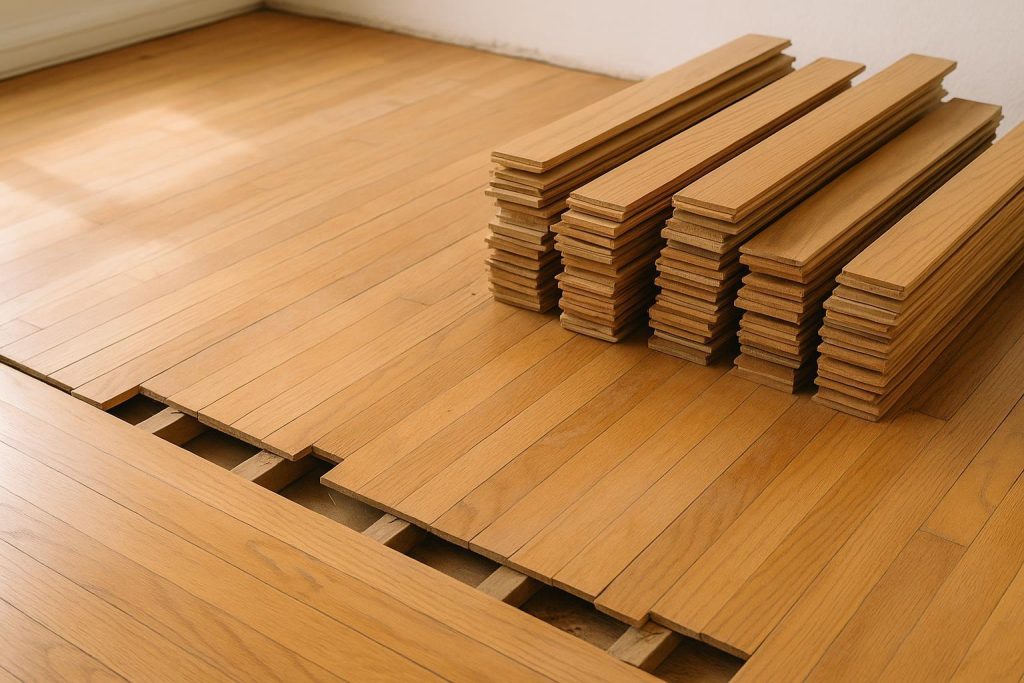
- Careful removal: Pull out each plank using a pry bar, slowly and methodically, to minimize damage. Quick or forceful removal can crack boards, making them less appealing for reuse.
- Remove nails, staples, or glue residue: The more you can clear off the board, the easier it’ll be for the next person or organization to reuse that wood.
- Organization: Store the boards in a dry area, stacked evenly and raised off damp floors. If they warp before they get reinstalled, they’ll probably end up going to the landfill instead.
Doing this prep work takes extra time, but it’s worth it if you’re committed to reusing the boards or donating them to a community project, salvage yard, or local nonprofit that might transform old wood into something useful.
Exploring the Recycling Option
Even if your old hardwood can’t be reused in its existing form, you might still have the option to recycle it—depending on your local recycling facilities. Facilities in some areas accept clean, untreated wood scrap for mulch or wood chips. However, many recycling centers have strict guidelines about the type of wood they accept. Finishes, stains, adhesives, or other chemicals can disqualify wood from being processed. That means hardwood floors with multiple layers of varnish from a few decades ago aren’t as simple to recycle as an unfinished pine board from your lumber offcuts.
If you want to pursue recycling, ask yourself the following questions:
- Are the wood planks free from chemical finishes? If your hardwood was coated with a modern, chemical-heavy finish, your recycling facility might reject it.
- Is the wood free from rot or mildew? Recycling machines don’t usually take moldy, rotted wood, so check thoroughly.
- Can I separate the planks from any adhesives? Staples and nails can be removed with some effort, but glues are often caked-on, making the boards difficult to recycle.
If the flooring still looks questionable after these considerations, you may need to move on to another disposal method.
Donation, Repurposing, or Upcycling
If you love the idea of seeing your old hardwood live on (even if you don’t want it yourself), donation is a great option. Some community organizations, salvage stores, or repurposing centers will gratefully accept old wood. A few creative uses for older hardwood include:
- Furniture building: Skilled DIY enthusiasts can turn reclaimed planks into tables, benches, or shelves.
- Art or decor projects: Donated hardwood might get turned into rustic wall art, picture frames, or small craft items.
- Community projects: Some charities that help with home restoration projects might reuse your old wood for minor repair jobs in older buildings.
Donating can be especially uplifting if the wood is in decent shape. It keeps valuable materials out of landfills and helps someone else with a creative or practical project. If you don’t see a direct donation option in your community, you could post the boards online, letting others know they’re available for pickup.
Safe Disposal When Recycling Isn’t Feasible
Some old hardwood floors simply aren’t in condition to be reused or recycled. Years of wear, repeated water damage, or subfloor adhesives might have ruined them. In that case, safe disposal is the next step. Although wood is considered more biodegradable than many other building materials, you still can’t just toss large piles of flooring into the closest dumpster. Many municipalities have limits on curbside pickup sizes or require specific disposal guidelines for construction debris.
This is where working with professionals comes in. Hiring a licensed contractor or junk removal service can make quick work of an old hardwood floor removal job. They’ll come prepared with the equipment, trucks, and know-how to get rid of your flooring safely and responsibly. When you hand that lumber over to an experienced outfit, they may also help you figure out if any of the material is salvageable or recyclable.
Considering Interior Demolition Services
Removing old hardwood flooring often goes hand in hand with other renovation tasks, like tearing out drywall or removing kitchen cabinets. If you’re tackling multiple parts of a remodel at once, you might benefit from professional interior demolition services. These services can handle partial tear-outs with specialized tools, ensuring that only the target areas get removed. It’s more efficient than trying to rip out big sections of your home by yourself—especially if you’re juggling work, family, or a tight move-in/move-out schedule.
Interior demolition can be particularly useful when you’ve got a big remodeling project and you need the space cleared out fast. Instead of renting a dumpster and hauling out every board, you can have a crew take care of it. Professionals also know how to handle any hazards, like dealing with old nails or unexpected mold spots hidden under floors. If you’re in Edmonton or surrounding communities such as St. Albert, Sherwood Park, or Spruce Grove, it’s often easier to call in a local, trusted team for these situations.
Tips for Efficient Hardwood Floor Removal
Whether you’re doing it yourself or hiring a pro, here are a few practical tips for a smooth hardwood removal process:
- Check for obstacles: Remove furniture, area rugs, or any items that could slow down the job.
- Gather the right tools: A pry bar, hammer, and a sturdy pair of work gloves are must-haves for manual removal.
- Plan for disposal ahead of time: If you don’t have a clear disposal plan, old flooring can pile up fast, creating a hazard. Arrange for a junk removal service if needed.
- Inspect for rot or damage before you start: In some cases, rotting wood can break apart quickly, so wearing a dust mask is a good idea to avoid inhaling harmful particles.
Frequently Asked Questions
Q: Can all types of hardwood be recycled?
A: Not necessarily. Whether your hardwood floors can be recycled depends on factors like adhesives, chemical finishes, and rot. Some recycling facilities accept clean, treated wood, while others will reject it if there’s too much contamination.
Q: What if my hardwood floors have nails or staples?
A: Removing metal fasteners is essential if you plan to donate or recycle the boards. If you’re taking them to a disposal facility, they might require you to remove those items or they’ll charge you a higher tipping fee.
Q: Can I repurpose hardwood floors in my own home?
A: Absolutely. If the planks are structurally sound, you could repurpose them as accent walls, shelving, or even smaller furniture pieces.
Q: How do I dispose of a large volume of hardwood flooring?
A: If you have a significant amount of debris, consider hiring a junk removal company that can do a curbside pickup or a complete removal directly from your home. They’ll handle the heavy lifting and make sure it’s dealt with properly.
Q: Are there any demolition services for removing hardwood floors?
A: Yes, many companies that offer interior demolition can take up your old floors along with other demolition tasks, saving you the stress of multiple contractors.
Wrapping It All Up
So, can you recycle old hardwood floors? The answer depends on the condition of the wood, the finishes and adhesives used, and your local recycling setup. If your hardwood is still in decent shape, you can donate or reuse it—giving it a new life and keeping good material out of the landfill. For floors that aren’t salvageable, working with a reliable junk removal or demolition service ensures safe, responsible disposal.
Whether your goal is to go green by recycling every plank possible or simply make space in your home for fresh materials, it’s best to map out your plan before you rip up any flooring. Think about donation, recycling, or interior demolition services, and don’t hesitate to enlist help if it all feels overwhelming. Proper removal and disposal not only keep your renovation on schedule, but also ensure you’re handling your discarded wood in a way that respects your home and the environment.