
Top Tools and Techniques for Removing Hardwood Floors
Removing hardwood floors can be a daunting task, especially if you’ve never tackled a demolition project before. Whether you’re renovating an older property, planning a new design for your space, or simply swapping out worn-out wood for something more modern, the process of tearing out hardwood can be labor-intensive. However, armed with the right tools, techniques, and safety considerations, you can take on this type of demolition with greater confidence.
In this comprehensive guide, we’ll explore strategies for efficiently removing hardwood floors while keeping mess and effort to a minimum. We’ll cover the most useful tools, cover potential hazards to keep in mind, and walk through each step of the removal process—from preparation and safety checks to final disposal of the debris. We’ll also discuss when it might help to call professionals, such as a specialized team that offers interior demolition, particularly if you need extra muscle or a time-saving alternative.
Why Remove Hardwood Floors?
Hardwood floors are timeless and durable, so why would anyone want to remove them? Here are some common reasons:
- Damage or excessive wear: Over many years, hardwood can become scratched, splintered, or warped beyond repair.
- Style updates: Some redesigns call for a different flooring material, such as tile or modern engineered hardwood, to match a new aesthetic.
- Structural concerns: Occasionally, a subfloor or floor joists can be compromised or damaged, requiring removal of the hardwood to address the underlying issue.
- Renovations or system upgrades: Major home renovations might require opening up floor space to update plumbing, electrical, or HVAC systems.
No matter the reason, preparing ahead and having the correct tools will help you remove your old hardwood floor with fewer headaches.
Essential Tools and Protective Gear
Using the right tools can save both time and effort. Of course, you don’t need every tool on the list, but certain items definitely come in handy. Here are some of the most common tools:
- Safety goggles and gloves: Wood splinters and nails can cause injuries. Protective goggles shield your eyes, while sturdy gloves protect your hands when ripping out boards.
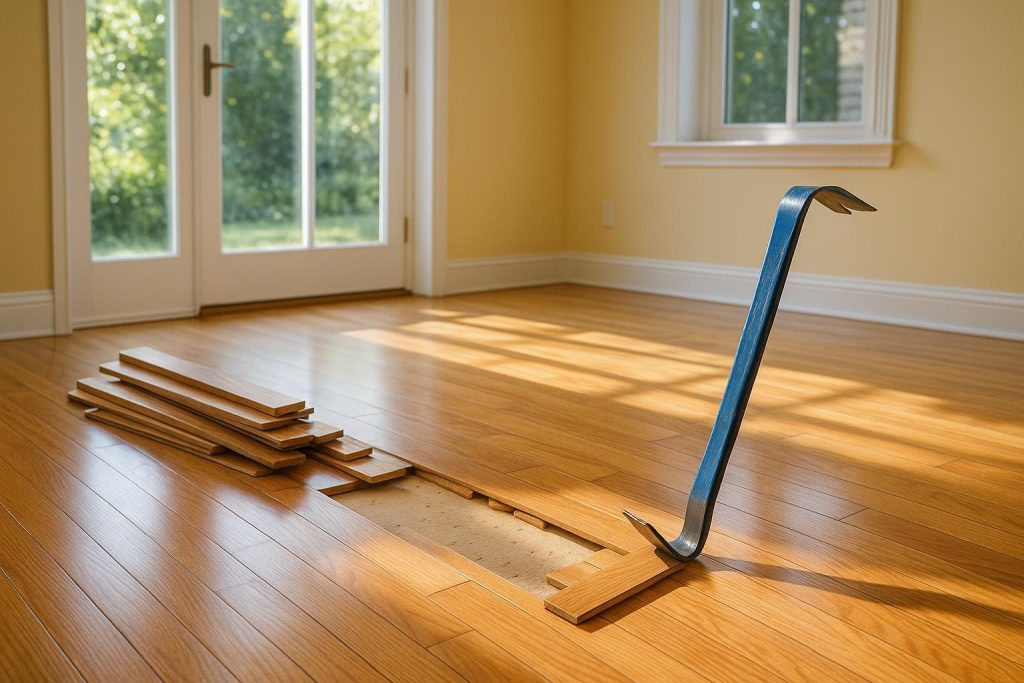
- Pry bar or crowbar: A pry bar is crucial for prying up planks, especially when nails or staples keep boards firmly attached. The wider the bar, the better leverage you get.
- Floor scraper or long-handled scraper: This tool helps strip away leftover adhesives or fragments of wood that remain once the bulk of the floor is gone.
- Reciprocating saw or circular saw: If you’re dealing with especially stubborn flooring sections, a saw can help by cutting through boards or cutting them into smaller sections that are easier to pry up.
- Hammer: A hammer is helpful for loosening nails and sometimes tapping the pry bar under tough boards.
- Nail puller: Although you can remove nails with a standard pry bar, a dedicated nail puller can reduce strain on your wrists and pry bar.
- Utility knife: Keep one on hand to cut away underlayment or any glued sections as you go.
Additionally, consider wearing knee pads if you’ll be kneeling for a long period, and ensure you have a dust mask to protect your lungs from airborne particles, especially if the wood is decades old and has old finishes or adhesives.
Planning the Removal Process
Before plunging into hardwood removal, spend a little time planning. This could include measuring square footage so you have a clear sense of the work involved, checking if the flooring is nailed or glued, and deciding the best entry and exit points for removal. Make sure children and pets are out of the area to avoid accidents with sharp tools or flying debris.
One tip for especially tough flooring: cutting it into smaller segments can make the planks easier to lift. You can create parallel saw cuts along the boards, taking care not to slice into the subfloor. Once cut, use your pry bar to peel them up in manageable pieces rather than large boards all at once. This approach might involve more steps, but it often feels less physically demanding.
Step-by-Step Removal
- Clear the space: Remove all furniture, décor, and rugs from the room. This ensures you have unobstructed access to every section of the hardwood floor.
- Remove baseboards and trim: If your hardwood was installed under baseboards or molding, remove these carefully to gain full access for prying up the flooring.
- Assess the direction of installation: Typically, hardwood is laid parallel, which can impact how you approach each board for lifting.
- Start with a test section: Pick a corner or less visible area for a test run. Use the pry bar and hammer to see how easily the board pulls away and whether nails or staples remain behind.
- Pry up the boards: Slide your pry bar under a board and apply steady pressure. You may need to drive the bar deeper with a hammer. Work methodically along the board’s length so it doesn’t split uncontrollably.
- Cut, if necessary: For especially long or stubborn boards, use a reciprocating or circular saw to cut segments, making them more manageable to pry up.
- Remove fasteners: Watch out for nails or staples left in the subfloor. Pull or pry them out to avoid hazards when you install new flooring or if you plan to clean up the space thoroughly.
- Clean up debris: Collect broken wood pieces, nails, staples, and dust. A shop vacuum can help pick up smaller particles.
Taking it step by step helps you maintain control throughout the process, prevents damage to the subfloor (if you plan to reuse it), and ensures that you keep track of all leftover fasteners that might cause future problems.
Flooring Adhesives and Subfloor Considerations
Many older hardwood floors are installed with nails, staples, or adhesives. If glue was used, you might find that prying up boards is more difficult. In that situation, you may need additional tools like a heat gun or specialized scraper to soften or peel away dried adhesive. Be sure to wear your safety gear, especially a respirator if you suspect that old adhesives could generate fumes when heated.
Additionally, check what condition your subfloor is in once you remove a few boards. If the subfloor is water damaged, moldy, or severely worn, you may decide to remove or replace it. Often, discovering an old subfloor’s condition is one of the reasons people remove hardwood in the first place. If you’re not comfortable assessing subfloor integrity, consider talking to a professional who has carpentry or demolition experience.
Handling and Disposing of Old Hardwood
Once you’ve pried up your hardwood boards, you’ll have a significant amount of debris to handle—a pile of wood, nails, dust, and possibly underlayment scraps. Depending on your local regulations, you may be able to recycle untreated hardwood, though some areas require you to take it to specific facilities. Always check municipal guidelines for proper disposal or recycling.
If you’re in or around Edmonton, you might choose to work with companies that perform interior demolition and debris removal. This could save you from multiple trips to the local dump or recycling center. Just make sure that when you hire a service, they explain how they handle wood debris so you’re not left with a big mess of nails and splinters. Reputable crews will handle removal and disposal rather than just dumping the debris at your curb.
When to Call in Professionals
While tackling a hardwood floor removal can be doable on your own, some scenarios might warrant bringing in an experienced demolition crew. Consider reaching out for help if:
- The area is very large (like a whole house) and you have limited time or no extra hands.
- The floor is installed with heavy-duty adhesives, making it nearly impossible to remove with standard pry bars.
- You discover structural issues such as rotting subfloors or hidden damage that complicates direct removal.
- You have physical limitations or simply prefer to let pros handle the tough labor.
- Time is urgent, perhaps because you’re preparing to renovate or sell a home, and you need the job done as quickly as possible.
Professional demolition services typically bring a full set of specialized tools, know how to contain dust and debris, and will often haul everything away so you don’t have to worry about rented trailers or disposal fees (beyond a final invoice). For many homeowners, it’s worth the cost to save on effort, reduce risk, and ensure the process is done efficiently.
Maintaining a Safe Work Area
Hardwood floor removal can scatter sharp, loose nails all over the place, creating potential hazards. Set up a system to contain the debris from the start. For example, lay down plastic sheeting or designate a specific bin for nails and small splintered boards to avoid stepping on them. If you use power tools, run extension cords away from traffic paths to keep them from being a tripping hazard.
Keep a first aid kit handy and check your progress every so often to remove any stray boards, nails, or old trim. It’s easy to get so focused on dismantling that you forget about the torn-up boards behind you. Breaks are a good time to do a quick sweep and reposition your materials, so you can keep going without losing track of safety.
Preparing for the Next Step: After Removal
Once your old hardwood floors are completely removed, it’s time to inspect and clean the subfloor thoroughly. Vacuum or sweep away remaining dust or wood fragments, and remove any lingering adhesives. If necessary, repair or reinforce the subfloor. This is also the stage where you can improve the subfloor’s squeak resistance by securing it more firmly, or even adding a layer of underlayment if you’re installing new finishes.
Planning to upgrade your flooring? Now is an ideal time to decide on the new material. Whether you’re choosing engineered hardwood, laminate, or tile, make sure the surface beneath it is level and solid. An experienced contractor or flooring specialist can help you test moisture levels in the subfloor, especially if it’s wood-based and you’re installing a new wood floor. This ensures you won’t end up with warping or squeaking down the road.
The Bottom Line
The best tool for removing hardwood floors is often not just a single device, but a combination of tools used in the right sequence. A trusty pry bar will do most of the heavy lifting for nailed-in floors, while a reciprocating saw or circular saw can help segment boards or cut through stubborn adhesives. Safety gear—especially goggles, gloves, and a quality dust mask—should be part of your arsenal as well, to protect you from common hazards like splinters, nails, and airborne particles.
For smaller projects or DIY enthusiasts who enjoy saving money and tackling home challenges, removing hardwood floors with the right approach is certainly feasible. Just understand it involves a fair amount of grunt work, plus some extra caution in disposing of the old planks. However, if you’re short on time, lacking the necessary tools, or simply want the job completed faster by a professional, an interior demolition crew could be your best friend.
Ultimately, the most important steps are to plan ahead, stay safe, and handle cleanup and disposal properly. By choosing the right combination of tools and techniques, you can remove your hardwood floor in a way that sets you up nicely for your next renovation project. Whether you do it yourself or call on an expert team, following these guidelines will help ensure a smooth and successful hardwood floor removal.