
Deciding Whether to Remove Existing Tiles or Install New Ones
If you’re planning a renovation or looking to refresh your floors or walls, one question that might come up is whether you should break your existing tiles and install new ones, or simply place new tiles on top of the old. This is a common dilemma for homeowners and property managers, especially if the existing tiles are still intact but no longer match the look or function you need. Choosing how to proceed can significantly impact your project timeline, budget, and final results.
Below, we’ll explore the factors that go into deciding whether to remove your old tiles or install new ones on top. We’ll discuss the advantages and disadvantages of each approach, walk through the removal process, and provide important safety considerations. By the end, you’ll have a clearer picture of which option is right for you, and how professional interior demolition services might help if you decide the old tiles need to go.
Why Consider Breaking and Removing Existing Tiles?
Tiles are typically installed with a backing of thin-set mortar or adhesive, forming a tight bond with the subfloor or wall surface. Over time, tiles can chip, crack, or become outdated in style. Even if the tile looks fine on the surface, the underlying adhesive may be worn, or moisture can seep through loose grout lines, compromising the subfloor. Here are some reasons people opt to remove old tiles before installing new ones:
- Structural Integrity: If your existing tile is showing signs of damage, it may indicate potential issues with the subfloor or foundation. Removing the tiles allows you to inspect and repair any damage beneath.
- Avoiding Height Problems: Stacking new tiles on top of old can raise the floor level, possibly causing issues with door clearance or transitions to adjacent floors. Removing the originals ensures a uniform height throughout.
- Long-Term Durability: By removing any compromised or worn-out materials beneath the tile, you can ensure the new tile installation has a stable, even surface to bond to, which helps improve its lifespan.
- Correcting Uneven Surfaces: If the existing tile is uneven, chipped, or has high spots, removing it is usually the best way to achieve a uniform surface for your new tiles.
- Opportunity to Update Subfloor: A tile installation project is an ideal time to replace or reinforce the subfloor. This is particularly helpful in older homes where moisture damage, rotting, or squeaking can occur.
Why Consider Tiling Over Existing Tiles?
Tiling over existing tiles can sometimes be a viable shortcut, but it’s not always the best choice. It can save time, money, and a lot of dust if the existing tiles are firmly bonded and in excellent condition. Below are reasons homeowners or renovators might choose this route:
- Less Mess and Demolition: You avoid the noise, dust, and labor of physically breaking up and removing tile. This can make a project simpler if you’re confident in the integrity of the old surface.
- Faster Installation: Because you’re not hauling away debris or spending time chiseling out each tile, your new flooring or wall can be ready in significantly less time.
- Lower Immediate Cost: Without demolition or disposal fees, you may save some money up front, especially if you’re on a strict budget.
While these benefits are appealing, you should carefully evaluate whether the existing tile is truly in good condition—free of cracks, chips, or hidden moisture. Plus, you’ll want to confirm that adding tile on top won’t cause issues with thresholds, doors, and transitions to other rooms. If the tile surface isn’t perfectly smooth or level, and if there’s any doubt regarding the subfloor’s condition, it’s usually safer in the long run to remove the old tile altogether.
Key Factors to Evaluate Before You Decide
Whether you decide to break and remove your tiles or install new ones on top, here are the most important factors you should consider:
- Condition of the Existing Tile and Subfloor: If there are multiple cracked tiles or issues underneath, full removal is often the best solution. Over-tiling may worsen any pre-existing issues.
- Moisture Concerns: Areas like bathrooms or kitchens are prone to water exposure, and a compromised or damp subfloor can lead to mildew, mold, and eventual damage. Removing the old tiles will help identify whether moisture problems exist.
- Height Restrictions: Every layer you add to your floor raises the finish level. This can create awkward transitions or block doors. Check your clearances and plan accordingly.
- Long-Term Maintenance: Even if tiling over old tile looks fine initially, any hidden issues can cause tiles to loosen or grout lines to crack. If you’re planning a long-term solution, removing and replacing is often worth it.
- Project Budget and Timeline: Removal can cost more money and time in the short run. However, if you have the budget and want peace of mind, removing the tile is the more thorough option.
Steps to Safely Remove Existing Tiles
If you opt to break and remove your existing tiles, a structured approach will help ensure that you don’t cause unnecessary damage to your subfloor—or to yourself. Below is a general overview of how tile removal usually proceeds:
- Gather Your Tools and Safety Gear: You’ll need items like a hammer, chisel, dust mask, safety glasses, and gloves. A pry bar, floor scraper, or rotary hammer (for larger areas) may also be needed.
- Clear and Protect the Area: Remove all furniture and rugs from the room. Cover vents, doorways, and any fixtures with plastic sheeting to contain dust. If you have baseboards or trim that you want to reuse, remove them carefully and set them aside.
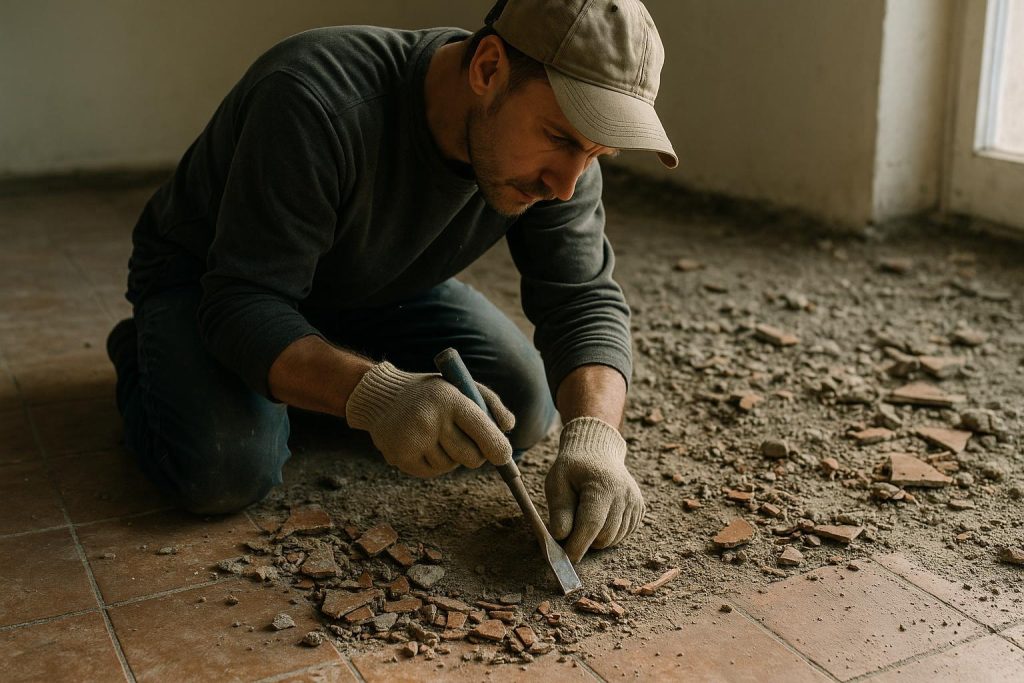
- Start at a Loose Edge or Corner: If there’s a damaged tile, begin there. Use your chisel to get under the tile and gently tap with a hammer. Ensure you’re wearing proper eye protection—tiles can send sharp shards flying.
- Continue Removing Tiles Methodically: Work your way across the floor or wall, prying each tile off. For stubborn or well-adhered tiles, you might need to use a hammer drill or chisel. Be mindful of any wires or plumbing hidden behind walls or under floors.
- Get Rid of Adhesive or Thin-Set: Once the tile is removed, scrape or grind away any remaining mortar or adhesive to create a smooth surface. Uneven areas will cause problems with your new tile.
- Dispose of Waste Properly: Tile shards are sharp, so keep them in sturdy containers or bags. Some areas have municipal guidelines for debris disposal. If you have a large load, it might be best to haul it to a proper facility or hire a junk removal service to ensure everything is handled and recycled responsibly when possible.
Safety and Health Considerations
Breaking tiles can create significant dust, including possible silica fragments, which can irritate your respiratory system. Sharp debris can also lead to cuts or punctures if handled incorrectly. For that reason, it’s important to:
- Wear a Dust Mask: Silica dust may be hazardous to your lungs. Invest in a quality respirator mask if you’re working on a large-scale project.
- Use Protective Eyewear: Flying tile shards can be very dangerous, so goggles or safety glasses are a must.
- Protect Your Hands and Skin: Heavy-duty gloves and long sleeves can help prevent nicks and scrapes.
- Ventilate the Area: Open windows and use fans to keep the air circulating, especially if you’re working in a smaller space like a bathroom.
If the project scope is large or presents other hazards—like potential asbestos in older homes—it’s best to consult a professional removal crew or an interior demolition service that knows how to test and remove materials safely.
Benefits of Hiring Professional Services
While there’s definitely a DIY route for tile removal, many homeowners find it time-consuming and laborious. Professional demolition services specialize in minimizing dust, protecting your home’s structure, and ensuring that you can move forward to your new tile installation with a clean slate. Here are a few benefits of working with professionals who know demolition inside and out:
- Speed and Efficiency: Experienced crews understand the fastest way to remove old tiles without compromising subfloors or walls.
- Debris Haul-Away: Removal creates plenty of rubble. Rather than making multiple trips to the landfill, professional services will get rid of the debris, saving you time and hassle.
- Safety Assurance: Pros come prepared with the right equipment for dust control and safe handling of sharp or potentially hazardous materials.
- Thorough Surface Preparation: If your subfloor needs repair or leveling, professionals know how to identify and fix those issues so your new tile installation will last longer.
These advantages can justify the upfront cost for many people. The peace of mind you get from a smooth, hazard-free job often makes professional help well worth it.
What If You Decide to Keep Your Old Tiles?
In some cases, homeowners realize partway through a project that the old tiles might be in good shape after all, or that replacing them doesn’t align with the current budget. If the tiles are intact, the grout is solid, and the color or style still works, you could:
- Freshen Up the Grout: Sometimes, a deep cleaning or regrouting is enough to give old floors or walls a like-new appearance.
- Resurface or Reglaze: Some tiles can be painted or reglazed, especially in bathrooms, to achieve a bright, modern look. This approach requires special materials and careful prep.
However, keep in mind that these cosmetic fixes won’t address underlying issues like loose subfloors, cracks, or moisture damage. They’re best suited for tiles that are still structurally sound.
Estimated Costs and Time Involved
Costs vary widely based on location, the size of the space, the complexity of the job, and whether you hire professionals for part or all of the work. In general, removing old tile and disposing of the debris can add a few hundred to a few thousand dollars to a renovation, depending on scale. Likewise, most tile removal takes anywhere from a few hours in a small bathroom to multiple days in a larger kitchen or commercial space.
If you do decide to tile over existing tile, you’ll save on demolition costs but should budget for top-quality skim coat products, specialized adhesives, and possibly professional leveling to ensure the new tile surface is safe and durable.
Making Your Final Decision
Ultimately, the choice between breaking and removing existing tiles versus installing new ones directly on top depends on:
- The structural condition of the old tile and subfloor
- Your budget and timeline
- Your willingness to tackle or supervise demolition
- The style and design goals you have for the space
If you’re in doubt, it’s wise to consult with a reputable contractor or demolition expert who can advise you on the state of your existing tile. In many cases, investing the time and money to remove old tiles leads to a stronger, longer-lasting upgrade. But if your current tile is stable and you’re convinced that adding a little extra height won’t cause problems, over-tiling could be the right move.
Professional Help for Tile Removal and Disposal
Removing tiles can be a physically demanding, dusty job. If you’d rather leave the heavy lifting to professionals, consider working with a demolition and disposal service that specializes in interior demolition projects. From prying up stubborn tile to hauling away debris, a trained team can streamline your renovation and keep your home or property protected throughout the process.
Whether you’re looking to simplify your tile removal or need assistance getting rid of the demolished materials, seeking out expert help is often a worthwhile choice. That way, you can focus on the excitement of your new tile design instead of worrying about the mess, the dust, and the risk of potential property damage.
If you decide that your best route is to break your existing tiles and go with something fresh, be sure to plan your project comprehensively and take safety precautions. And if over-tiling is truly suitable for your needs, it can be a viable solution that saves you time and money. Either way, doing your research and preparing properly will help you get the end result you want: a beautiful, durable surface you can enjoy for years to come.