
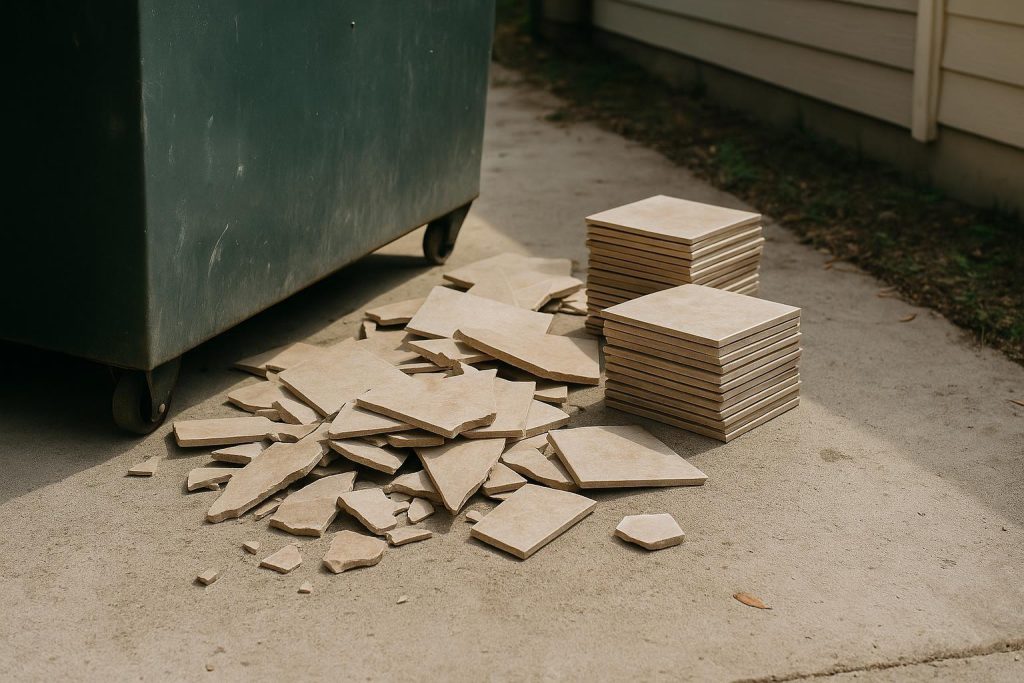
Responsible Ways to Dispose of Flooring Tiles
Most homeowners or renovators eventually face the question of whether flooring tiles can simply be thrown into the trash. While it might seem tempting to pile them into the nearest bin, there are several factors to consider before disposing of tiles in general waste. From understanding local waste regulations to assessing whether doors, walls, or floors might contain asbestos, tile disposal can be more complicated than it first appears. In this guide, we'll explore safe, legal, and eco-friendly ways to get rid of flooring tiles, along with tips to streamline the process for anyone looking to renovate or declutter.
Understanding Flooring Tile Materials
Flooring tiles come in a variety of materials, from ceramic and porcelain to vinyl, laminate, stone, and even glass. It's important to identify the type of tile you have before deciding how to dispose of it. For instance:
- Ceramic or Porcelain Tiles: Common in kitchens, bathrooms, and entryways, these tiles are typically inorganic. They can sometimes be recycled at specialized facilities or repurposed for craft or landscaping projects.
- Vinyl or Linoleum Tiles: Popular in older homes, vinyl or linoleum tiles might contain asbestos, especially if they were manufactured in the mid-20th century. Extra caution and professional advice should be considered when disposing of these.
- Natural Stone Tiles: Made from materials like marble, slate, or granite. In large quantities, stone tiles can be heavy and may require professional hauling or equipment to remove and transport safely.
- Glass Tiles: Often used in backsplashes or decorative patterns. Glass tiles might be accepted by certain recycling centers, but check local guidelines first.
Why You Shouldn't Always Toss Tiles in General Waste
Not all waste management services allow tiles in the regular garbage bin. Tiles are generally bulky, heavy, and may be considered construction or renovation debris. Some municipalities have strict limits on how much renovation waste you can include in your everyday trash. If tiles contain hazardous substances or adhesives, it could be dangerous or illegal to dispose of them with normal household garbage. Here are a few reasons to avoid tossing them in general waste:
- Weight and Volume: Regular curbside pickup often has volume and weight limitations. A significant amount of tile might exceed these limits.
- Environmental Impact: Tiles can take up space in landfills and potentially release harmful substances if not disposed of correctly.
- Asbestos Risks: Older vinyl or linoleum tiles can contain asbestos, which needs specialized handling and disposal procedures.
- Possible Fines: Improperly disposing of construction or renovation debris can sometimes lead to penalties, depending on local regulations.
Steps to Prepare Tiles for Proper Disposal
To help ensure that your tile disposal is legal, safe, and environmentally responsible, here are a few practical steps:
- Identify the Tile Type: Before deciding on a disposal method, figure out whether your tiles are ceramic, vinyl, stone, or another material. Recognizing age and composition can alert you to potential hazards, such as asbestos.
- Clean Off Excess Mortar or Adhesive: Scrape away the bulk of any mortar, grout, or adhesive left on the back of each tile. This step can make it easier to evaluate if the tile can be recycled or repurposed.
- Separate Tiles from Other Debris: If you have drywall pieces, insulation, or other renovation leftovers, separating them from the tile waste makes it easier to dispose of and ensures that each type of debris goes to the right facility.
- Contain Hazardous Materials: If there's any suspicion your tiles contain asbestos, get them tested by a professional before disturbing them further. Asbestos contamination can be dangerous to yourself, your family, and waste handlers.
Disposal Options for Flooring Tiles
Once you've identified the material and thoroughly separated your tiles, you can choose from a range of disposal or recycling options. Below are some of the most common ways to handle the task:
- Drop-Off at a Local Recycling Center: Many municipalities have facilities that accept construction and demolition debris. Contact them in advance to confirm if your tile type is allowed. Ceramic and porcelain tiles can sometimes be crushed and used in road beds or other fill materials, but this varies by location.
- Donate Usable Tiles: If your leftover tiles are in good condition, consider donating them to building reuse centers, charities, or community art projects. Many organizations are happy to receive partial or excess tile boxes for small-scale repairs or creative endeavors.
- Professional Junk Removal: If you have large quantities of tile or limited time, a junk removal service can simplify your life. Trained professionals can handle the loading, hauling, and responsible disposal or recycling of tiles. Junk Removal might be a good solution for those who are dealing with substantial volumes of flooring debris after a renovation.
- Rent a Dumpster: For big-scale remodels, renting a dumpster could be a smart choice. However, pay attention to local rules; some places ban certain materials, require a permit, or have weight limits that can add to your costs if exceeded.
- Reach Out to Specialized Disposal Companies: If you suspect your tiling might contain harmful materials like asbestos, contact specialists for a safe, compliant removal process. Attempting to handle hazardous materials on your own can pose serious health risks and potential legal complications.
Importance of Proper Handling and Safety
It's not just about convenience; proper tile disposal is also a matter of safety for yourself, your neighbors, and the workforce that handles waste. The following tips can help ensure a smooth, hazard-free experience:
- Wear Protective Gear: When ripping up old tiles, use safety goggles, gloves, and possibly a mask to avoid inhaling dust and particulate matter.
- Avoid Creating Excessive Dust: Mist the floor lightly with water before prying up the tiles to minimize dust, especially if you suspect any asbestos content.
- Contain the Debris: Use strong bags or sealable containers to store removed tiles. Clearly mark any materials suspected of containing asbestos so that professional handlers can take the correct precautions.
Repurposing and Recycling Ideas
It's not always necessary to throw out old tiles. If they're still in decent shape or can serve another function, several repurposing ideas could be both creative and eco-friendly:
- Outdoor Walkways or Garden Paths: Broken ceramic or porcelain tiles can form a mosaic-like path through a garden or backyard. Just be cautious with sharp edges.
- Art Projects or Mosaics: Even bits and pieces can make a beautiful mosaic tabletop, backsplash accent, or framed art piece.
- Coasters and Trivets: Larger, intact tiles can be used as heat-resistant trivets on a kitchen table or coasters for cups and mugs.
Legal and Environmental Implications
Many regions have strict regulations on how construction and demolition (C&D) materials must be handled. Throwing large quantities of tiles into your household garbage can result in fines or other legal consequences if it violates local laws. Additionally, leaving tiles in landfills when there are recycling or repurposing options can have a negative environmental impact. Proper disposal helps reduce landfill waste and prevent potential contamination from adhesives or glazes used in tile production. Always consult your municipal guidelines or waste management website to stay compliant with local regulations.
What to Do if You're Renovating
When a home improvement project involves pulling up old floors, it's easy to underestimate the volume of tile debris. Consider these tips to make tile removal more straightforward:
- Plan Ahead: Factor in time and costs associated with tile disposal when budgeting for your renovation.
- Engage Professional Services: If you're removing a large section of flooring as part of Interior Demolition, an expert crew can help remove materials efficiently while adhering to safety protocols.
- Simplify Cleanup: Keep a dedicated area or bin on-site for discarded tiles. This helps you stay organized and keeps dust from spreading around your home.
How to Spot Asbestos in Older Tiles
Asbestos was once a popular additive for floor tiles due to its durability and fire-resistant properties, commonly found in vinyl and linoleum. If your property was constructed or renovated extensively before the 1980s, there's a chance asbestos could be present. While not all old tiles contain this harmful mineral, you shouldn't assume you're in the clear without verification. Asbestos can release fine particles that linger in the air and can be harmful if inhaled. If you suspect asbestos, hire a qualified professional for an inspection before you start any demolition or removal. Specialized handling and disposal are crucial if asbestos is found. Attempting to remove asbestos-containing materials yourself can lead to serious health risks and legal repercussions.
Could Professional Junk Removal Help?
Yes. If you've pulled up a large number of tiles and need them gone quickly, a Demolition or Junk Removal company can be a practical option. Trained crews know the most efficient removal methods and can transport the debris to appropriate disposal or recycling facilities. This service is especially useful when:
- You Need Quick Turnaround: Perhaps you're doing a renovation and need the waste cleared to move on to the next stage of the project.
- The Tiles Are Extremely Heavy or Bulky: Professionals have handling equipment and vehicles designed for construction debris.
- You're Unsure How to Sort the Materials: Services that specialize in debris removal are aware of local rules and obligations. They can separate recyclables, hazardous materials, or landfill items.
Check Your Local Guidelines
Disposal rules can differ significantly from one municipality to another. In some areas, you can set out small amounts of tile debris for curbside pickup; in others, even a single bag of demolition waste may require special permits or disposal methods. Always consult local guidelines or check your municipality's waste management website. If you live in or near Edmonton or the surrounding areas, there may be specific regulations on how to dispose of high volumes of renovation debris, including flooring tiles.
Final Thoughts
While it might be tempting to throw flooring tiles into your general waste, taking a moment to consider the safest and most responsible way to handle them can save time, money, and stress in the long run. From avoiding possible fines to safeguarding the environment, adhering to proper disposal methods is well worth the effort. Whether you choose a recycling option, a local drop-off station, or a professional junk removal service, disposing of your flooring tiles responsibly helps keep neighborhoods clean and ensures that potentially harmful substances are handled with care.
By following the guidelines offered here—understanding tile composition, pre-cleaning materials, and following local regulations—you'll make your next renovation or decluttering project simpler and more environmentally friendly. So, before you toss those old tiles in the trash, take the time to research and select the disposal method that best fits your needs. Proper tile management not only keeps you compliant with waste regulations but also contributes to a cleaner, healthier world for everyone.