
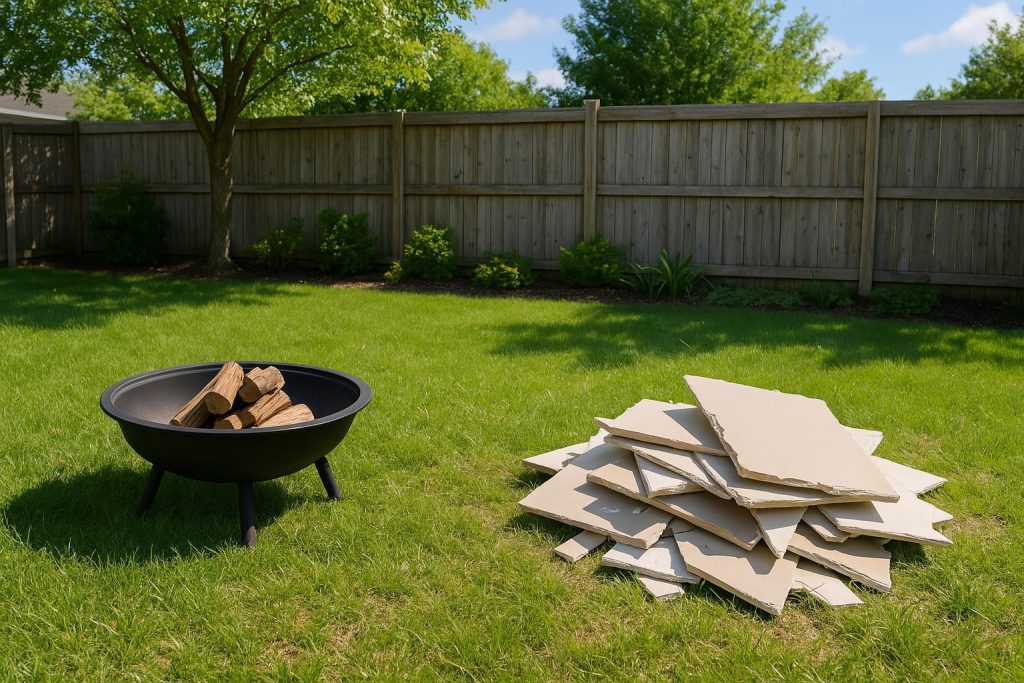
Why Burning Drywall in a Fire Pit Isn’t a Good Idea
Burning drywall in a fire pit might seem like a quick way to get rid of leftover construction or renovation scraps. After all, if you have a backyard fire pit, it can be tempting to toss unwanted materials in there for convenient disposal. However, tossing drywall onto a fire isn’t recommended—both from a legal standpoint and for your own health and safety. In this article, we’ll explore the reasons behind this, what burning drywall can do to the environment, and the more responsible ways to dispose of or remove unwanted drywall. If you’ve been wondering, “Can I burn drywall in my fire pit?” read on to learn why you should avoid it and what you can do instead.
Understanding What Drywall Is Made Of
Before discussing why burning drywall is ill-advised, it’s helpful to understand what drywall actually consists of. Drywall—also commonly referred to as sheetrock or plasterboard—is typically made of gypsum plaster that’s sandwiched between two layers of paper. Gypsum is a type of soft mineral known as calcium sulfate dihydrate. Whether you have brand-new drywall pieces or scraps removed during a demolition project, the core is made of this same mineral compound. While generally safe as a building material, it isn’t meant to act as fuel in a bonfire or backyard fire pit.
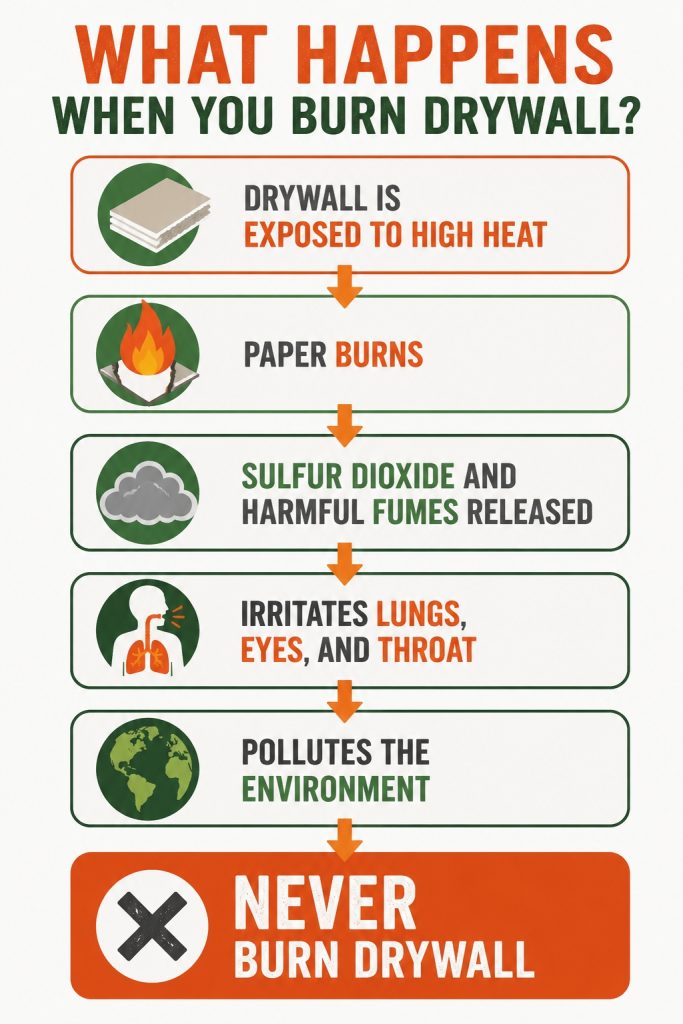
When you light drywall on fire, the heat can cause the gypsum to break down. In addition, the paper backing may burn, producing foul odors and potentially harmful airborne particles. Although burning paper might not sound hazardous, the gypsum can release sulfur-based compounds if the material is exposed to high temperatures. In short, drywall is engineered for building and finishing walls, not for incineration.
The Potential Dangers of Burning Drywall
There are several risks associated with burning drywall, many of which are often overlooked. Let’s break down the negative consequences that can arise from throwing sheets of drywall into your fire pit:
- Toxic Fumes: When gypsum is exposed to very high heat, it can emit sulfur dioxide and other noxious fumes. These gases are unpleasant to breathe and may irritate your lungs, eyes, and throat. If you’re standing near the fire, you could inadvertently inhale these toxins.
- Health Concerns: Prolonged or repeated inhalation of sulfur-containing compounds can be dangerous. People with respiratory issues, such as asthma or allergies, may be especially vulnerable to complications arising from breathing in these fumes.
- Environmental Damage: Burning drywall doesn’t just affect the immediate surroundings. The smoke and particulates can disperse over a wide area, potentially impacting wildlife, plants, and neighbors.
- Unpleasant Odor and Residue: As drywall burns, it can produce a strong, lingering odor that’s far from the pleasant, smoky scent of a typical campfire. You also risk leaving a residue of ash mixed with gypsum particles in your fire pit, making cleanup a hassle.
Legal Implications and Local Regulations
Apart from health and environmental concerns, local regulations in many regions prohibit burning construction materials like drywall. Municipalities often have restrictions about what can be safely burned, especially in residential areas. Some areas only allow burning dried wood, branches, and other organic matter. Attempting to burn drywall may result in fines if you’re found violating local environmental or air quality laws. Always check your local bylaws before disposing of any materials by burning, and remember that drywall typically falls under construction debris—something municipalities commonly restrict or regulate heavily.
In short, it’s both unsafe and frequently illegal to burn drywall. Being aware of and adhering to your area’s regulations can help you avoid problems with neighbors, community boards, or environmental agencies. It’s always smarter to explore legitimate disposal or recycling methods instead of risking a potential violation or fine.
What Happens to Drywall After It’s Removed
Because drywall is made primarily of gypsum and paper, many people don’t give a second thought to how it should be disposed of. However, drywall disposal is more involved than simply throwing it in with everyday household trash. Here are a few standard methods for handling used drywall:
- Landfill Disposal: Most commonly, homeowners and contractors take drywall scraps or old panels to landfills that accept construction and demolition (C&D) debris. Landfills typically separate this debris from general household waste, ensuring drywall is buried according to local safety regulations.
- Recycling Programs: In some places, drywall recycling programs exist to keep reusable gypsum out of landfills. The drywall gets broken down, and the paper is separated from the gypsum—both can be repurposed or recycled. However, not all areas have recycling facilities that accept drywall, and the material must be uncontaminated.
- Reusing or Repurposing: Unused sheets of drywall, or sections that remain in good condition, can sometimes be repurposed. For smaller renovation projects, partial sheets might still be used. Check local buy-and-sell groups or online marketplaces where you can give away leftover building supplies before resorting to disposal.
Practical Alternatives to Burning
If you’re dealing with damaged drywall and looking for an efficient, legally compliant approach to disposal, consider these alternatives:
- Drop-off at a Local Facility: Many waste facilities have designated areas for construction debris, and drywall fits neatly in this category. Loading up your vehicle and dropping it off ensures everything is handled lawfully and responsibly.
- Hiring a Professional Service: If you’re unable to transport the drywall or you have a large pile of debris, it may be time to seek help. A junk removal or demolition professional can make quick work of hauling away old drywall. If you’re tackling a renovation project and need drywall removed safely to prepare for further upgrades, you can also consider interior demolition services. This way, you won’t have to worry about disposing of materials improperly, and you’ll save time.
- Municipal Collection: Some cities have bulk pickup or special waste collection days where you can set your construction debris curbside for collection. Check with your local waste management department to find out the specifics, and always ensure your drywall is properly bagged or bundled if required.
Health Considerations and Fire Safety
Burning drywall doesn’t merely introduce pollutants into the air; it also poses a potential fire safety risk. Because drywall was never designed to be a fuel, it can burn inconsistently and sometimes release a burst of heat or dangerous chemicals. The incomplete combustion could lead to smoldering sections that emit toxic smoke long after you think the flames have died down. Moreover, the physical debris that remains in your fire pit could contain residue you don’t want around children, pets, or even your garden if you use the ashes as fertilizer.
If you’re looking to keep your backyard campfire both safe and enjoyable, stick to burning clean, dry wood. Not only does it give off less smoke, but it also helps maintain the integrity of your fire pit. Throwing in construction materials of any kind, including painted or pressure-treated wood, is always risky and often governed by strict local bylaws.
Environmental Consequences
While it may seem harmless to throw an unwanted scrap of drywall into the fire—especially if you’re only doing it once—the cumulative effect can be detrimental. On a larger scale, repeated burning of gypsum-based products contributes to air pollution, as it releases sulfur dioxide and other pollutants. These pollutants can harm air quality, contribute to smog, and potentially cause respiratory difficulties for people living in densely populated neighborhoods. Additionally, heavy metals or other additives sometimes found in specialized drywall can become airborne, posing further ecological risks.
When weighed against these environmental consequences, responsible disposal methods are a clear winner. Instead of turning your fire pit into an incinerator, opt for established waste management channels that minimize harm to both human health and the natural world.
Is There Any Situation Where Drywall Is Safe to Burn?
Given all the information above, you might be wondering if there’s any scenario where burning drywall is acceptable. Generally, the answer is no. Even in remote places where people might be tempted to burn construction waste, the release of toxins into the air is still a hazard. Additionally, if you’re subject to local regulations, you run the risk of legal consequences or community complaints. Some individuals may attempt to burn only the paper backings, but it’s incredibly difficult to separate the paper from the gypsum without contaminating the material. Ultimately, burning drywall is more trouble than it’s worth and poses too many risks.
Safe Removal Tips
If you’re removing drywall yourself, whether from a single room or an entire home renovation, keep these tips in mind:
- Proper Gear: Wear gloves, a dust mask, and protective eyewear. Removing drywall can kick up a lot of dust, and you want to avoid breathing that in.
- Avoid Cross-Contamination: Keep broken pieces and dust off other surfaces to prevent tracking gypsum through the house. Lay down drop cloths if you’re working in a finished area, and carefully gather scraps as you go.
- Separate Clean from Contaminated: If you’ve got moldy or water-damaged drywall, bag it separately from the undamaged material. Contaminated drywall can complicate disposal or recycling efforts, so be thorough in dividing them.
When Professional Help Makes Sense
Sometimes, the simplest way to handle drywall scraps—especially large quantities—is to hire a reputable demolition or junk removal service. If you’re involved in a bigger renovation, taking down walls, or need to handle multiple rooms, a professional can handle the heavy lifting, transportation, and proper disposal of the debris. If you’d rather not handle the mess yourself, or you don’t have the right vehicle to transport large amounts of drywall to a facility, let professionals do it for you. Having the right team on the job can save you time, stress, and potential fines, ensuring that everything is done lawfully and safely. Additionally, if you’re planning to renovate beyond just removing drywall, demolition services can help you tackle the entire project efficiently.
Frequently Asked Questions
1. Can I burn small pieces of drywall in my backyard fire? Even small pieces of drywall can release harmful fumes, making it unsafe. While you might think that smaller pieces reduce the risk, the toxins and odors remain the same.
2. Is it ever permissible to burn drywall if the gypsum and paper are separated? It’s nearly impossible to remove all gypsum residue from the paper without contamination. The paper itself may have gypsum particles embedded in it, making burning unwise and hazardous to breathe.
3. I’ve seen people burn paper all the time—why is drywall paper different? Regular paper in a fire pit is generally less problematic, though it still can produce ash that drifts into the air. Drywall paper, however, is usually covered in coatings or impregnated with gypsum dust, increasing the risk of harmful emissions.
4. What should I do with leftover, unopened drywall sheets? If your drywall sheets are unused and in good condition, consider donating them to a local charity, Habitat for Humanity store, or another organization that can make use of building supplies. Alternatively, use them in a future home improvement project.
5. Can I throw drywall scraps in my normal household trash? In many regions, small amounts of drywall can be placed in your regular trash, provided they’re bagged properly. However, for larger quantities, you typically need to arrange special pickup or delivery to a construction and demolition debris facility. Always check local guidelines.
Final Thoughts on Safely Disposing of Drywall
The desire to cut corners when dealing with leftover renovation materials is understandable. Loading up your fire pit with debris might seem like a quick and easy fix. Nonetheless, the immediate convenience pales in comparison to the risks: toxic fumes, environmental harm, and the potential for legal trouble. The gypsum in drywall just isn’t meant to be set ablaze—it’s formulated to help walls resist fire, not fuel it.
Responsible drywall disposal typically involves one of the following: transporting it to an approved facility, arranging a dedicated pickup, or hiring professional services to remove it for you. In the long run, these methods ensure that you keep your air clean, your community safe, and your wallet free from potential fines. Whether you’re dealing with minor home renovations or major overhauls, stay on the right side of local regulations by disposing of drywall in a way that prioritizes health and safety. Avoid the temptation to burn drywall in your fire pit, and keep those backyard fires reserved for natural, untreated wood. Doing so will protect you, your neighbors, and the environment from unnecessary exposure to toxins, maintaining the comfort and relaxation your backyard retreat is meant to provide.