
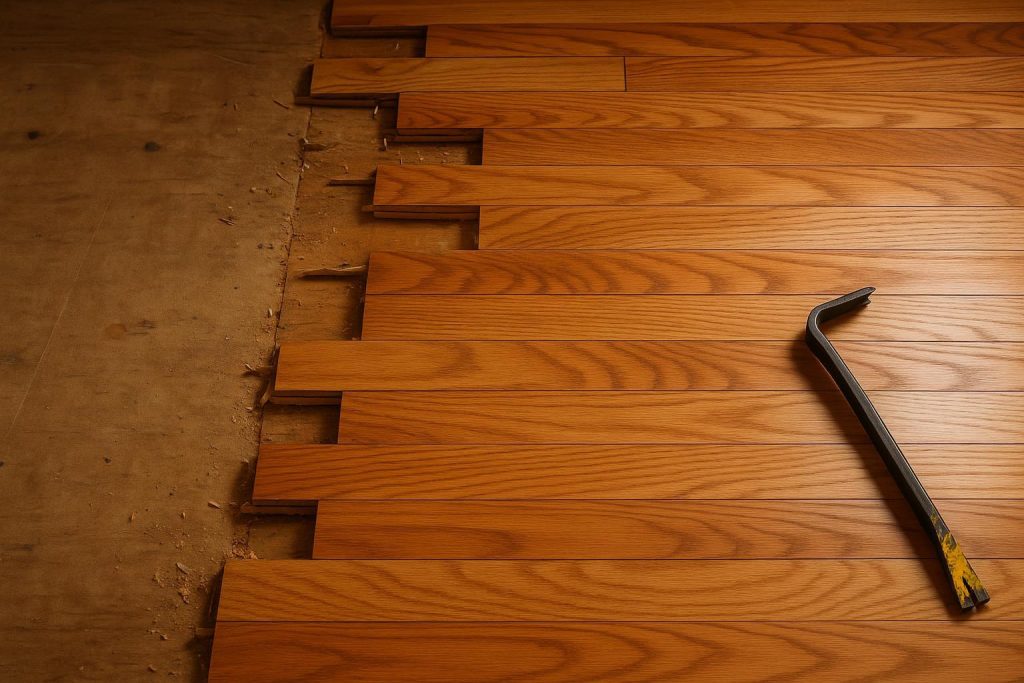
Everything You Need to Know About Removing Glued-Down Hardwood Floors
Removing glued-down hardwood flooring can be a challenging project, even for confident DIYers. This type of flooring is secured by a strong adhesive that holds each plank tightly to the subfloor. As a result, you usually need more than a simple pry bar or hammer to get the job done. Below, we’ll walk you through the essential steps, from preparing the workspace to dealing with leftover adhesive. By understanding these steps, you’ll know what it takes to remove glued-down hardwood floors safely and efficiently.
1. Prepare Your Workspace
Before you begin, you’ll want to set up your workspace so the removal process goes smoothly. Here’s what to consider:
- Clear the room: Remove all furniture, rugs, and décor. The more open space you have, the easier it is to navigate tools and keep track of debris.
- Protect adjacent surfaces: If you plan to keep your walls or baseboards, cover them with plastic sheeting. Removing glued-down flooring can generate a lot of dust and debris. You don’t want it settling on or damaging other surfaces.
- Wear safety gear: It’s best to work with sturdy gloves, closed-toe shoes, safety glasses, and a dust mask or respirator. Pieces of wood or adhesive can go flying, and the adhesive can generate dust or fumes.
- Have disposal options ready: Removing hardwood floors creates substantial debris. Plan how you’ll dispose of the old planks and leftover adhesive materials. Some people rent a dumpster or schedule a bulky trash pickup. You can also contact a junk removal team to handle this part for you.
2. Gather the Right Tools
Glued-down flooring typically requires more specialized tools than a standard hardwood floor that’s floated or nailed. Here are some must-haves:
- Pry bar or floor scraper: A long-handled floor scraper can help pry up edges and pop sections of wood free from the subfloor.
- Oscillating multi-tool or circular saw: If the hardwood planks are buried under multiple layers or are particularly stubborn, you may need to cut them into smaller sections before prying them up.
- Heat gun or flooring removal machine: Some adhesives loosen when heated. Using a heat gun can help break the bond between the subfloor and hardwood planks.
- Chisel or putty knife: For stubborn adhesive clumps, having a hand tool that can scrape off residue is often essential.
- Utility knife: Handy for cutting plastic sheeting, scoring edges, or trimming small pieces of flooring.
3. Remove the Baseboards and Trim
To avoid damaging your baseboards or trim during removal, it’s a good idea to remove them before you start pulling up floor planks. Gently slip a pry bar behind the trim and pull it away from the wall. Take care not to crack or splinter the wood if you plan to reuse these pieces. Place the removed trim in a safe spot out of your work area.
4. Cut the Flooring into Manageable Sections
One of the best ways to tackle glued-down hardwood floors is by cutting them into pieces. This approach reduces the stress on your tools and helps you remove old flooring more systematically. Use a circular saw or oscillating multi-tool to cut lines through the hardwood every few feet. Be mindful of your cutting depth, ensuring you don’t damage the subfloor beneath. Depending on the thickness of your hardwood and its adhesive bond, you may need to experiment to find the right cutting method.
5. Pry Up the Hardwood Planks
After cutting your hardwood floor into sections, start working on the edges. Use a pry bar or a long-handled floor scraper to lift each section of flooring. By pushing the scraper’s blade at an angle, you can reduce some of the tension from the adhesive. In particularly stubborn spots, a heat gun can help soften the glue. Alternate between prying and applying moderate heat until the plank begins to release.
Here are some quick tips:
- Work slowly: Attempting to yank up large areas at once might crack or splinter the wood violently, making it harder to get a clean lift.
- Focus on corners or seams: If a plank won’t budge, check if the seam or corner may give you better leverage. Sometimes flipping the plank at a different angle helps.
- Watch for hidden nails or staples: In addition to glue, some installers use nails or staples, which can slow you down if you’re not expecting them.
6. Deal with Leftover Adhesive
One of the biggest challenges when removing glued-down hardwood floors is the adhesive left on the subfloor. You might find patches of dried, rubbery glue stuck to the entire surface. Here are some ways to handle this problem:
- Scraping: A hand scraper or putty knife is your first line of defense for leftover adhesive. Though time-consuming, consistent scraping can be effective.
- Chemical solvents: Certain flooring adhesives react well to chemical adhesive removers. Ensure good ventilation when using these products, and follow the manufacturer’s instructions carefully. Wear protective gear to avoid skin or eye irritation.
- Heat application: If the adhesive is heat-sensitive, a heat gun or even a heavy-duty hair dryer might loosen it enough for easier scrapings.
- Floor buffing machine: Some homeowners rent a floor buffer fitted with heavy-duty pads to sand off stubborn glue residue. This can be faster but requires caution so you don’t damage your subfloor.
7. Clean and Inspect the Subfloor
Once the hardwood and adhesive are gone, thoroughly clean the entire area. Vacuum or sweep away debris and dust. Go over the surface with a slightly damp mop to grab any remaining fine dust. Look for signs of damage such as:
- Water damage or rot: If moisture has seeped under the old flooring, the subfloor might be soft or discolored.
- Weak areas: Sometimes subfloor boards can warp or crack after years of tension from glued flooring. Check carefully for squeaks or spongy spots.
If necessary, make repairs or replace damaged subfloor sections before installing new flooring.
8. Dispose of the Debris Properly
A glued-down hardwood floor removal can result in a surprising amount of debris. You’ll have stacks of old hardwood planks, adhesive remnants, and possibly sections of underlayment. The disposal method depends on local regulations and the volume of debris:
- City curbside or bulk pickup: Check your municipality’s schedule to see when they allow large or bulky construction debris alongside regular trash collection.
- Rent a dumpster: For bigger projects, renting a dumpster makes sense. You can throw everything in throughout the project and have the dumpster company haul it away.
- Professional junk removal: If you want a no-hassle solution, hiring a junk removal service is a great option. They handle the heavy lifting, loading, and disposal for you. This is even more helpful if you’re dealing with other demolition tasks simultaneously. See Junk Removal for a straightforward way to get rid of old flooring.
9. Consider Professional Assistance
Although handling glued-down hardwood removal yourself is doable, it can be physically demanding and time-intensive. If you prefer a more hands-off approach or have concerns about damaging your subfloor, you might opt for local experts. A professional interior demolition team can manage all phases of the process—from prying up planks to hauling away waste.
If you live in the Edmonton area and need more extensive removal projects, interior demolition services are especially helpful. Such services are ideal if you plan to remove several layers of flooring or tackle other demolition needs in the same renovation.
10. Prepare for Your Next Project
With the old flooring and glue gone, you’re free to move on to the fun part: installing whatever comes next. Whether you plan to upgrade to a new hardwood, install tile or carpet, or simply refinish the underlying concrete, the biggest hurdle is behind you. A smooth, clean subfloor makes for a more successful installation plus fewer hiccups down the road. Take a moment to double-check the following:
- Subfloor flatness: If you notice any uneven areas, consider a leveling compound or minor repairs before putting in the new floor.
- Moisture barrier: This is particularly important if you’re installing new hardwood or laminate. Ensure the surface is protected against potential moisture issues.
- Transition pieces: If you’re connecting two different floor types (for example, hardwood to tile), figure out the best transition strip to create a seamless look.
Frequently Asked Questions
How long does it take to remove glued-down hardwood floors?
The exact timeline depends on factors like the size of the room, the type of adhesive, and your experience level. A small space might be finished in a single weekend, while larger projects can take several days.
Can I reuse the hardwood planks after removal?
Reusing hardwood is possible if the wood remains in good condition and you don’t mind scraping off any lingering glue. However, glued-down hardwood can be tough to salvage cleanly because of the adhesive residue and potential damage from prying and cutting.
Do I always need to remove leftover adhesive?
Yes. Installing new flooring over old adhesive can compromise the bond between the subfloor and your new flooring. It may also cause uneven spots or squeaking underfoot.
Who can I call for help with demolition and disposal?
If you’re in the Edmonton area, a local demolition service can handle floor removal as well as other small-scale projects. For a direct, no-nonsense approach, check out demolition services. They can also help with hauling the debris away if needed, so your project stays on track.
Final Thoughts
Removing glued-down hardwood floors is more than just ripping out old boards—it’s a process that demands proper planning, the right tools, and a willingness to tackle tough adhesive. By starting with a well-organized workspace, cutting the flooring into manageable sections, and using heat or specialized chemicals to handle the leftover glue, you can set your space up for a polished new floor. Whether you go the DIY route or enlist professional help, make sure you handle the scrap and waste responsibly to keep your renovation running smoothly. In the end, your efforts will open up a world of possibilities for updating your floors, refreshing your décor, and creating an even better environment for your home or business.